Transport & logistics sector
Your routes, capacity and lead times clear before the quote.
A shipper looking for a carrier first wants to know whether you serve their route, with what equipment and in what time frame. We build the site around those answers — routes, capacity, handling conditions — and end each path with a quote request that arrives already filled in.
In-house products and delivered sites





What's your profile?
Expertise adapted to your business
Goal
Show the routes you serve and let visitors request a price without detours.
Audiences
Shippers, logistics managers, purchasing teams.
Key pages
Routes, goods handled, capacity, lead times, handling, fleet, quote request.
Conversion
Quote request, phone call, email.
Web challenges
The challenges specific to your sector
A transport website has to answer concrete questions fast: where, what, how soon, at what price. Three friction points come up in nearly every project.
Make routes and lead times verifiable
Problem
Too often you have to call to find out whether a route is served and how long it takes. Visitors who cannot find the answer look elsewhere.
Solution
We create pages per area or route, with lead times and conditions stated clearly, plus a destination search.
Indicator
Views of route pages, quote requests by area, on-site search.
Qualify the quote request
Problem
An incomplete request — no weight, no location, no date — triggers back-and-forth and delays the reply.
Solution
We structure the form by type of goods: origin, destination, volume, loading constraints and deadline.
Indicator
Request completeness, response time, share of quotes that lead to an order.
Make handling readable
Problem
Handling, paperwork and tracking are often summed up in one line, even though they weigh heavily on the decision.
Solution
We dedicate a page to how a shipment runs: preparation, loading, documents, tracking and contact person.
Indicator
Pages viewed before the quote, time on page, inbound contacts.
Details that make the difference
What Synara does that others don't
A single contact form for every request.
A quote path adapted to the type of goods and the route.
Routes listed in a paragraph, impossible to look up.
Pages per area or route, readable and easy to find.
No information on capacity and lead times before the call.
Capacity, lead times and conditions stated next to each service.
Tracking and paperwork mentioned in a single sentence.
A page that walks through how a shipment is handled, step by step.
Expertise
Our expertise at the service of your sector

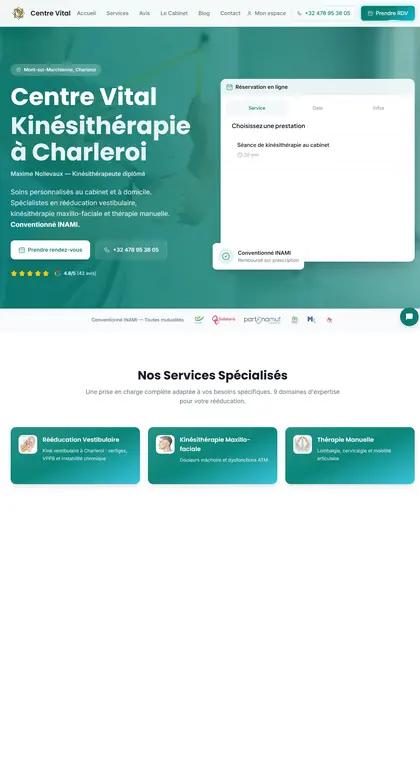
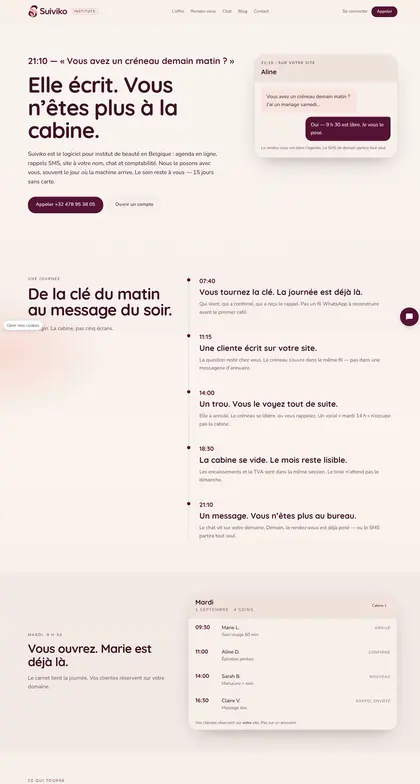
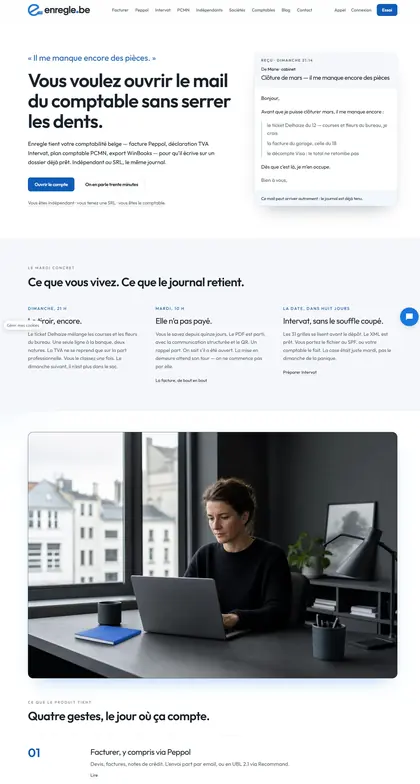
In Belgium
How your customers choose you
In Belgium, a shipper chooses a carrier on criteria that are barely negotiable: is the route served, in what time, with what kind of vehicle and under which loading conditions. The decision is often shared between purchasing and the person who runs shipments day to day, and the phone keeps a central role. The site must therefore make verifiable what others merely claim: areas served, capacity, documents, tracking. A logistics manager rarely reads a whole homepage; they look for one precise piece of information and leave if it cannot be found. In a bilingual country crossed by international flows, stating contact languages and border zones matters. Trust also comes from consistency between what is announced and how a request is actually handled.
What they type into Google
- international carrier liège
- refrigerated transport belgium
- corporate relocation brussels
- adr dangerous goods transport namur
- e-commerce logistics charleroi
- pallet transport mons
In practice
What we set up for you
- Pages per area or route, with lead times and conditions clearly stated.
- A quote form structured by type of goods, with weight, volume and constraints.
- A page describing a shipment step by step, from loading to tracking.
- A permits page explaining the types of transport covered and the documents available.
- An urgent-request box stating what to do outside opening hours, with the right contact.
Let's talk about your flows: half an hour to see what information is missing before a shipper asks for a price.
Book 30 minutesQuestions
Before you write
Should prices be shown on the site?
Rarely possible, because the price depends on weight, distance and the type of goods. We explain the factors involved instead, then guide visitors to a precise quote request.
Can you create a page for each destination?
Yes, when the route is genuinely searched for and the content adds value. We avoid thin or duplicated pages, which hurt search performance more than they help.
How do you connect the site to our tracking or management system?
Depending on the tool, we link to your existing portal, embed a simple tracking view or connect the form to your internal system. We start from what you already use.
How do we reassure clients about our transport permits?
A dedicated page mainly reassures industrial shippers: it names the types of transport covered, the documents available on request and the person who can supply them. No need to reproduce full certificates online; better to explain what is permitted, under which conditions and how quickly proof can be sent.
Should we show our customer references?
It helps when customers agree to be named, especially in sectors where discretion matters. Failing that, we describe the types of goods carried and the constraints mastered, without names. A logo alone proves nothing; a sentence saying what you carried and under what conditions is more credible.
How do we handle urgent requests outside opening hours?
We clearly separate requests that can wait until tomorrow from those that cannot, with a dedicated contact and the information to prepare. Promising an immediate answer with no organisation behind it disappoints; stating a realistic time frame and keeping it builds the relationship, including during busy periods.
Explore other sectors
See all sectorsNon-profit
Projects, beneficiaries and key figures that make people want to support your mission.
SaaS & software
Clarify your promise, showcase the product and smooth the path to trial or demo.
Insurance
Cover, exclusions and levels made easier to compare, without losing trust.
Dentist
Treatments explained simply, worries eased and booking made easy.
E-commerce
A buying journey that helps people find, compare and choose without diluting your brand.
Finance
Transparent information and reassuring navigation for financial services that are often complex.


Let's get started!
Let's get down to business.
Tell us where you stand — we reply within 24 hours with a free first review.


Get ready:you're going to love it.
 you're going to love it.