Startup sector
Explain the problem before showing the product.
Young companies adjust their story as they learn, and the site has to follow that pace without being rebuilt every time. We structure content around the problem you solve, the value you actually deliver and early traction signals, with distinct entry points for each audience.
In-house products and delivered sites





What's your profile?
Expertise adapted to your business
Goal
Make the problem and the promise clear enough to win first users and their feedback.
Audiences
Early prospects, beta testers, partners, first business customers.
Key pages
Problem, solution, product, use cases, team, early access, contact.
Conversion
Access request, trial, contact.
Web challenges
The challenges specific to your sector
A startup website has to explain fast, convince audiences who want different things and stay up to date. Three challenges come up almost every time.
Drop the jargon
Problem
Many young company sites stack market terms without showing a concrete use; visitors still do not know what the product changes for them.
Solution
We rewrite from the problem, the promise and usage examples, with short sentences and proof where it exists.
Indicator
Homepage engagement, clicks to the product, contacts.
Speak to several audiences
Problem
Prospects, talent, partners and investors arrive with different questions and leave if the site speaks to only one of them.
Solution
We create distinct paths: product and pricing for prospects, team and careers for talent, a dedicated space for partners and investors.
Indicator
Visits split by audience, session depth, contacts by profile.
Keep pace with the product
Problem
When the positioning shifts often, every copy change depends on someone else and the site falls behind reality.
Solution
We deliver modular blocks and reusable pages, with content separated from design so the team can iterate alone.
Indicator
Time to update, number of iterations, team autonomy.
Details that make the difference
What Synara does that others don't
A homepage written for investors, unclear to customers.
A path per audience, and a homepage that starts from the problem.
Market claims with no example or proof.
Concrete use cases, product screenshots and user feedback where it exists.
A full rebuild every time the positioning shifts.
Reusable blocks the team adjusts without breaking everything.
Traction numbers displayed with no period or context.
Signals dated and explained, only when they are verifiable.
Expertise
Our expertise at the service of your sector

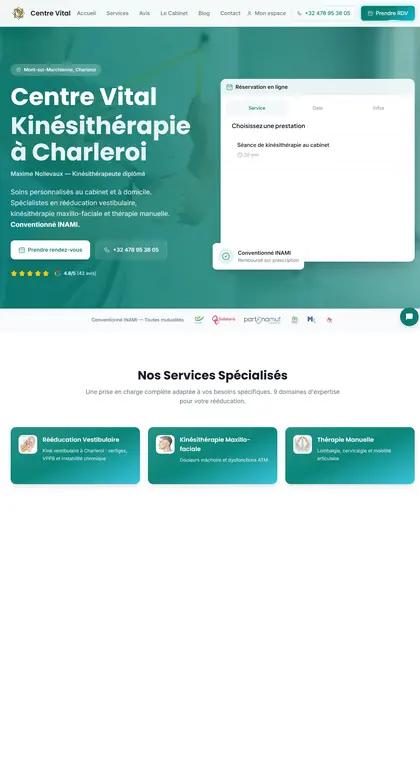
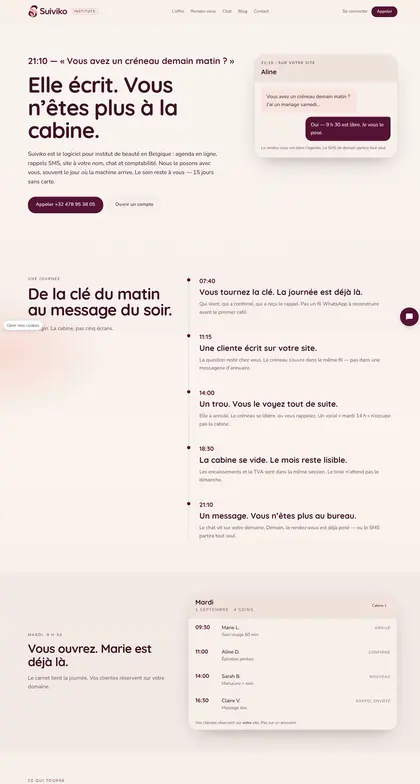
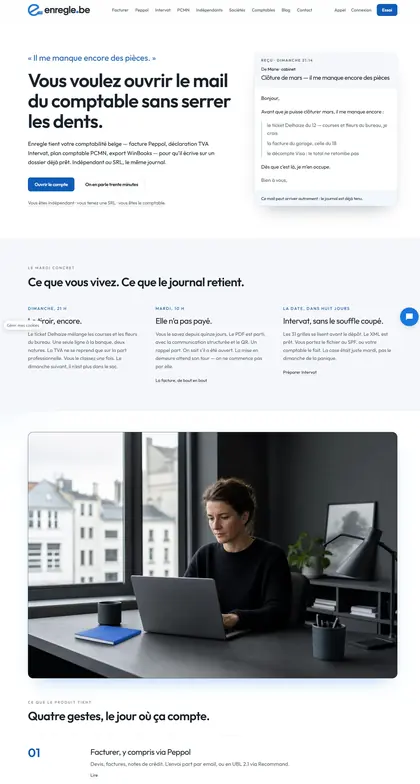
In Belgium
How your customers choose you
In Belgium, a young company often changes its story before it changes its product. The site is therefore read by audiences that never meet: a potential customer checking whether the tool solves their problem, a candidate judging the team, a partner looking for credibility, sometimes a funder checking the consistency of the pitch. Founders often write the copy themselves between two emergencies, so the site has to evolve without a rebuild project. Trust comes from modest but real proof: a use case told in detail, a genuine screenshot, a verifiable team name. In Brussels, planning Dutch avoids closing the door on partners and talent. A good startup site does not impress: it makes clear in seconds what the company does and for whom.
What they type into Google
- web agency for startups brussels
- product launch website liège
- website for young companies namur
- startup branding agency belgium
- startup website redesign charleroi
- one page website for startup mons
In practice
What we set up for you
- A homepage that starts from the problem being solved, before any product screenshot.
- A dated traction page, with verifiable signals rather than loose figures.
- Separate paths for prospects, candidates and partners.
- Blocks the founder can edit, to adjust the story without a redeploy.
- A team page that gives a face and a role to every person named.
Let's talk about your young company: half an hour to clarify what the homepage must get across first.
Book 30 minutesQuestions
Before you write
We don't have customers yet. What goes on the site?
The problem, the solution, use cases, a credible team and your early feedback: beta testers, interviews, a waiting list. No need to invent testimonials: an honest site beats a stage set.
Do we need a careers page already?
As soon as you are hiring, yes: candidates want to understand the product and the team before they write. Before that, a team page and a contact address are enough.
Will we be able to update the site ourselves?
That is the plan: reusable components and editable content without touching code. We train the people involved and stay available for structural changes.
Do we need a new site at every pivot?
Not at every pivot. The problem and the promise can evolve without touching the structure: we keep the pages, rewrite the copy and adjust the proof. A full rebuild makes sense when the product changes nature or when the main audience is no longer the same. In between, editable blocks beat months of project work.
Should we mention our funding rounds on the site?
It depends who the page is for. A funding round reassures some partners and candidates, but it does not help a customer decide. We mention it soberly in a dedicated section, never as the main argument. What matters more to a prospect is understanding what the product changes in their work.
How do we show traction without disclosing our numbers?
With verifiable, dated signals: number of active customers, sectors served, average tenure, approved quotes. We can also tell a use case without giving volumes. The key is never to leave a figure without a period or a method, because a sceptical reader will turn it against you.
Explore other sectors
See all sectorsTourism
Destinations, experiences and practical information in a journey that leads to the stay.
Veterinary
Care, emergencies, hours and immediate booking, with the team front and centre.
B2B
Expertise, case studies and resources connected across a complex sales cycle.
Small businesses & freelancers
A credible, easy-to-manage presence: services, service area and proof of trust on one page that converts.
SMEs
A website that works for your growth: clear offers, real case studies and direct contact, easy to evolve.
Real estate agency
Guide buyers, sellers and landlords through listings, neighbourhoods and services without losing their intent.


Let's get started!
Let's get down to business.
Tell us where you stand — we reply within 24 hours with a free first review.


Get ready:you're going to love it.
 you're going to love it.